Trails
The Steel Cotton Rail Trail
A series of station to station walks exploring the Peak District and canals from Sheffield to Manchester
About
In the first half of the 20th Century, Sheffield’s steel workers and Manchester’s cotton mill workers escaped their polluted cities to reach the clean air of the Peak District. They travelled by train on the Hope Valley line. Today the Peak District National Park exists for all of us to benefit from and the Hope Valley line still runs between the Steel and Cotton cities.
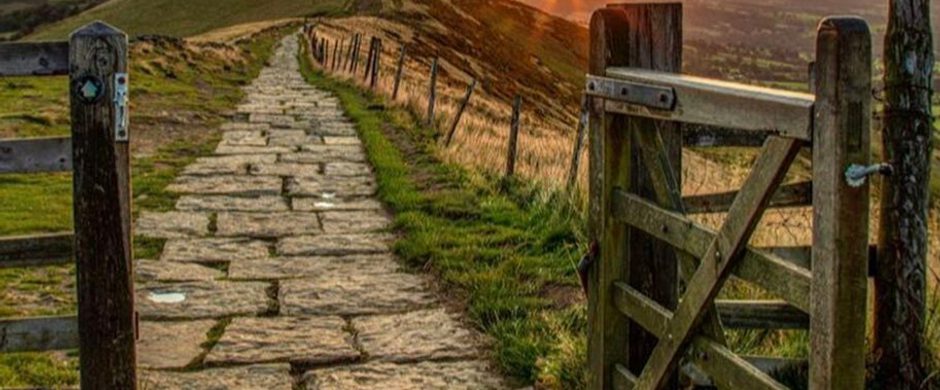
Thread your way along the Steel Cotton Rail Trail across the Peak District, from city to city and station to station. Walk over the hills and down into the majestic sweep of the Hope Valley, alongside Manchester’s canals, through woodland and meadows. Discover fascinating heritage highlights along the way on this route through the industrial past.
Plus, you always have the option to stop at the next station and catch a train back home. Do as little or as much as you like. Find out more peakdistrictbytrain.org/the-steel-cotton-rail-trail/
Trail directions
This section of the Steel Cotton Rail Trail follows the river Sheaf through Sheffield’s past and present industry. You’ll walk by former mill sites and past Abbeydale Industrial Hamlet, exploring the industry that made steel city.
This 10km section of the Steel Cotton Rail Trail offers you panoramic moorland views, woodland banks and streamside strolls as you make your way out of Sheffield’s leafy suburbs then up and over the hills and the railway into the Peak District National Park.
This 4km section of the Steel Cotton Rail Trail offers you historical gems, protected woodland filled with birdsong and a gentle riverside path through low-lying meadows.
This 5.6km section of the Steel Cotton Rail Trail offers you a gentle riverside walk through low-lying meadows taking in the views of the Hope Valley.
This 3.9km section of the Steel Cotton Rail Trail offers you a gentle route via the hamlets of Shatton and Brough, wandering through low-lying meadows to take in the views of the Hope Valley.
This 12.9km section of the Steel Cotton Rail Trail offers you a variety of low and higher- level walking as you leave the Hope Valley and head into the heart of the Edale Valley. You’ll walk in the wake of packhorses and jaggers who used these routes for trade before the emergence of the railway. Quiet woodland, low-lying fields and panoramic hillside views all feature on this section.
This 12.9km section of the Steel Cotton Rail Trail follows the Pennine Way for some of the route. This was the first long distance national trail, opened in 1965. You’ll walk in the historic footsteps of packhorses and jaggers who used these routes for trade. As you climb Jacob’s Ladder, a set of stone steps carved into the hillside, you will reach the Kinder Plateau.
This 7km section of the Trail offers you low-level walking along the Peak Forest Tramway Trail and canal, to the river Goyt and the Millennium Walkway. You’ll trace the historic routes of horse-drawn wagons which transported limestone to Bugsworth Basin. The quiet towpaths, narrowboats and riverside woodland make this a fascinating and peaceful walk with a spectacular finale.
This 3.5km section guides you through these historic towns, following the River Goyt before a steep ascent up the Goyt Valley Way, offering views of the valley below.
This 5.2km section from Strines Railway Station to Marple Railway Station offers a scenic walk through history and countryside.
This 6.6km section takes you along the Peak Forest Canal from Marple station to Romiley station.
This 6.6km section takes you along the Peak Forest Canal from Romiley train station to Hyde Central train station.
This 5.6km section rom Hyde Central station to Guide Bridge station offers a gentle canal walk from a town which grew rapidly from being just a cluster of houses in the 18th century, due to the impact of the Industrial Revolution and the cotton industry.
This 9km section takes you along the Ashton Canal, originally built in 1792 to serve the coal industry around Oldham, Ashton and Hyde and in particular to compete with the Worsley mines.
Sign up to our newsletter
Receive the latest news, special offers, ideas and inspiration straight to your inbox by signing up to the Visit Peak District & Derbyshire e-newsletter.